✅ List Dump: 26 July 2026 - casablanca, unseasoned fish n' chips, weird skin, basic pigeons of london, an evacuated center, archives and death
just a list of things I want to share in no order other than the sequence of remembering
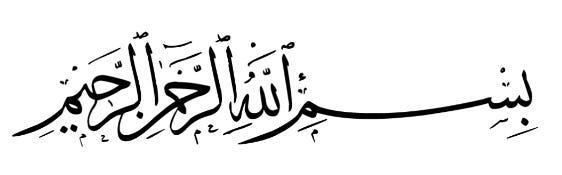
Bismillah. We begin everything with the name of Allah. We recite Bismillah to initiate an act, acknowledging the intention and ethics that follow.

Words (not including the ones describing the words I am typing to tell you about the word count):
2656

Look at me! We made it to week 5! This weekly writing routine has put me at 101,197 words. I mention the quantity to remind myself that I have sustained this commitment. These could have all been rubbish words, but they are my rubbish words, and I did not shirk my responsibility to myself. I am writing to you, but mostly to myself, as a reminder that my life is worthy of self-documentation. I find myself looking forward to writing. I am finding ease.
Check out the first one, or TL;DR: territorial mice, nipple injury, improv, an expensive orifice, dumplings, games, garden poems, friendship lore, and good times; the second one, TL;DR: spite-based newsletter writing, gil scott-heron and nina simone wish you a happy 4th of july, castle rock, bad dating app AI, bone broth, speech disorders, open-toe sandals, harper’s findings; the third one, TL;DR: cute patio situation in Montpellier, FR, facts about cicadas and acoustic defense, my love of tajin, unpublishing, Pope. L, falling in new york, and my new doggie friend; and the fourth one, TL;DR: pigeons, citrus, compost, bad birthdays, making music.
Today is a shorter one because I am exhausted. I have been up since 3 am. I took a nap like a grown-up!
Hello from Casablanca, Morocco. After spending two days researching in London, I hopped on an early plane to Morocco and am here in this beautiful city to start my residency, where I am sharing some of my research and, of course, will continue to do more. Thereafter, I am back in Paris, for you guessed it…research. My flat here in Casablanca is very cute, and my favorite gelato restaurant is just 30 seconds away. In fact, I can see it from my balcony window. I am here with Siniya Research, a center/site of “research, archiving and publishing practices towards a panafrican otherwise.” Prior to my visit, Fred Moten visited in May. If you are in Casablanca, you can sign up for my workshops/gatherings here. Unfortunately, this is all in-person, but I will try to share some artifacts from the learning here.
Workshop Description: You are invited to the new edition of “Unsettling the Page,” coming up August 3-6! Together, we’ll continue exploring the artist book as a collective, social, and critical tool. Our sessions will open with a conversation on Kameelah’s architectural publication practice and her zine collection, followed by a workshop that takes on questions like “how do we gather? to what do we bind ourselves?” all while considering surveillance and adversarial poetics in publishing. Participants are invited to create a site-specific collective book to be deployed at Siniya Research.
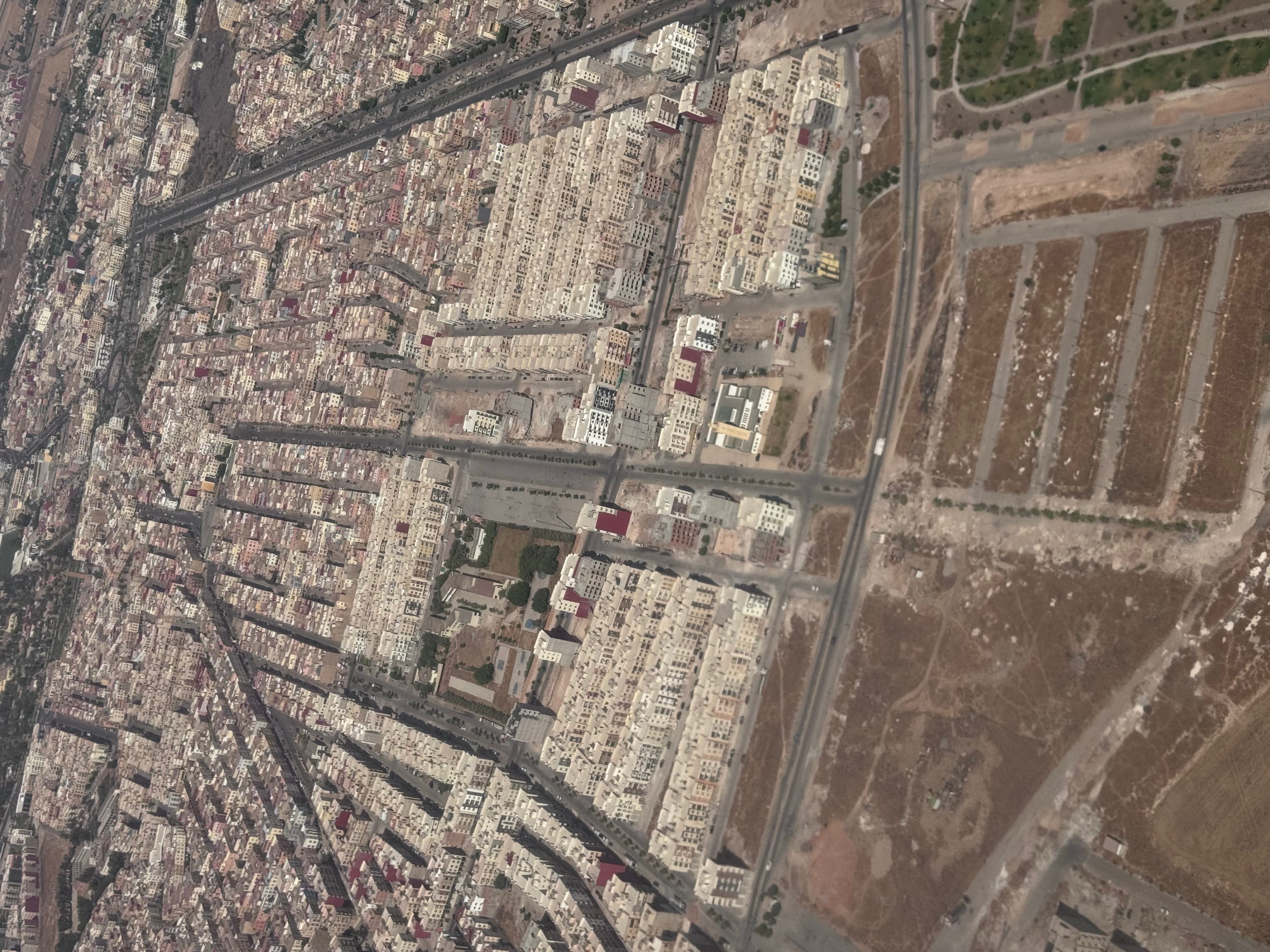
I am really grateful to be here. I have never been to North Africa, but given French colonialism, this place feels very familiar because of a very Parisian inflection: street-facing cafes and, of course, many streets have French names. I am excited to learn more about This is my second time in a Muslim-majority country, with Turkey being the first. I am curious about so much. My Arabic is embarrassingly terrible, and the dialect here, Darija, feels very unfamiliar. And as we know, I cannot speak French — tried and failed, accepting my capacity. I will work on my Darija because I definitely want to return. My dad is a Qur’anic Arabic teacher; however, Darija is nothing like that! Words and phrases I am learning in my first six hours:
Salam (hello) - I knew this one, duh!
Labas? (How are you?)
Shukran (Thank You) - And this one, of course!
Sbah l’kheir (Good morning)
Shwiya b shwiya (Slowly please) - I will be using this a lot!
Baslama (Goodbye) - I have never used this for goodbye!
When I was sixteen, several youths at my masjid went to an Arabic intensive in Yemen and Syria and came back able to read Qur'anic Arabic with ease. I wanted to go to one of those programs. At that age, I was really excited about Arabic because I equated fluency in Arabic with being closer to Allah. I think there is a more involved conversation here about proximity to Allah being measured in language acquisition, but I will table that for another time. Anyway, I did not go to the programs; I enrolled in college. When I studied abroad in Cape Town, South Africa, I took an Arabic basics course and had a terrible time; the pedagogical approach seemed grounded in shame and I am not about that life.

****

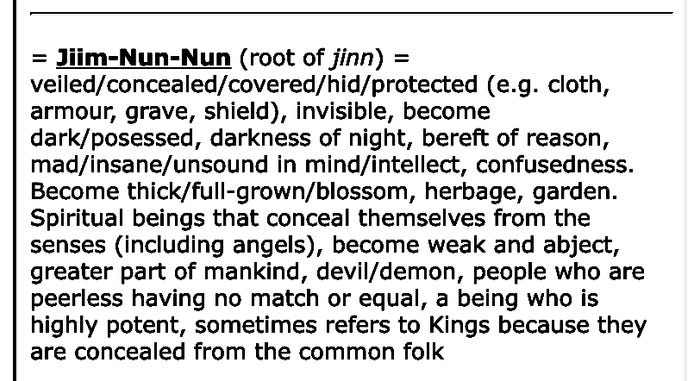
Since then, I have not returned to my study in any systematic way. Instead, per the contours of just who I am (and seemingly who Allah will not permit me to reject), I will spend months (or years) on a single triliteral root. I won't be able to read a darn thing, but I can tell you everything about that triliteral root and the math of diacritical marks and the poetics of motion embedded in the word harakat (thanks, Rahel Aima) and esoteric - cryptographic Arabic alphabets created by Andalusian Sufi, Ibn Arabi...but I cannot read. There is a very distinct and conscious part of me that knows that my relationship to learning is almost never comprehensive or systematic; I do not want to master systems or disciplines. Instead, I want to find a tiny corner of another tiny corner to burrow myself in for months on end, then emerge with more information that anyone will ever need or tolerate listening to. And then from there, I want to figure out how that speck that has expanded rather capaciously into all my background thoughts to widen the aperture around other things I am interested in. From learning about triliteral roots, I have a renewed appreciation or orbital patterns, embedded star clusters, and emergent language systems.

****

TL;DR - I cannot read Arabic well and my speaking is poor at best, but I love to study the structure of languages and maybe I missed my calling to study linguistics.
As I noted, I was in London right before Casablanca. Did I miss my train to London? Yes. I was on time, but in those last few moments, I couldn't figure out how to use the Airbnb lockbox. Then Wi-Fi didn’t work, so I had to shuffle between inside and outside to keep a signal long enough to stay in contact with my driver. By the time I finally got into the car, I was angry with myself. I was annoyed by the whole situation. Even extending a bit of grace to myself did not seem feasible. When there is nothing to do but just take it, there is a calm. I repurchased a new ticket after negotiating a replacement, only to learn that the new train was delayed by an hour. So now (well, no longer now, because it is four days later, but it was now at the time of writing — time adverbs are a lot of fun) I am sitting here in this beautiful train station with an attitude, sipping a very tasty cappuccino from this slowly deteriorating paper cup. I feel a bit calmer now and am resigned to the possibility that I just wasn't supposed to be on that train, because everything that could have happened did. I arrived rather exhausted in London.
On my first night in London, I was too tired to do much, so I ordered out. I do not know what London has against seasoning their fish and chips. It is criminal. Every time I am in the UK, I say Try again, Kameelah. And each time, I am disappointed. On my way out of London, I had two good meals: Farmer J and a Nepalese restaurant. I headed to Stansted yesterday afternoon because that was where I was flying out from. I ordered room service at the restaurant because I was again exhausted. These people delivered the worst burger I have ever eaten. I think it was a frozen composite patty, because it couldn’t have been meat. Here in Casablanca, I am excited to be in a place with sufficient seasoning! My first meal here was delicious. My skin is terribly dry and irritated, so I put on a face mask and turned on the 90-Day Fiancé season featuring Azan from Morocco.
In London, I learned that Pret a Manager has got London in a chokehold. There is like one on every corner. Having worked in Midtown, which is also littered with a lot of Pret a Manager, I do not know what the big deal is. It is overpriced corporate catering food. Also, it is bland.
Speaking of skin, it's been erratic. I have never had clear skin, and it has severely impacted my self-image, but now I feel like I am going through a second puberty, and I am very confused. Is this a perimenopause thing? I have had the skin of a 13-year-old boy for all my life, but somehow, things feel more excessive. Maybe I am just exhausted. Or maybe this is just the luteal phase slump. Whatever it is, I could do without it.
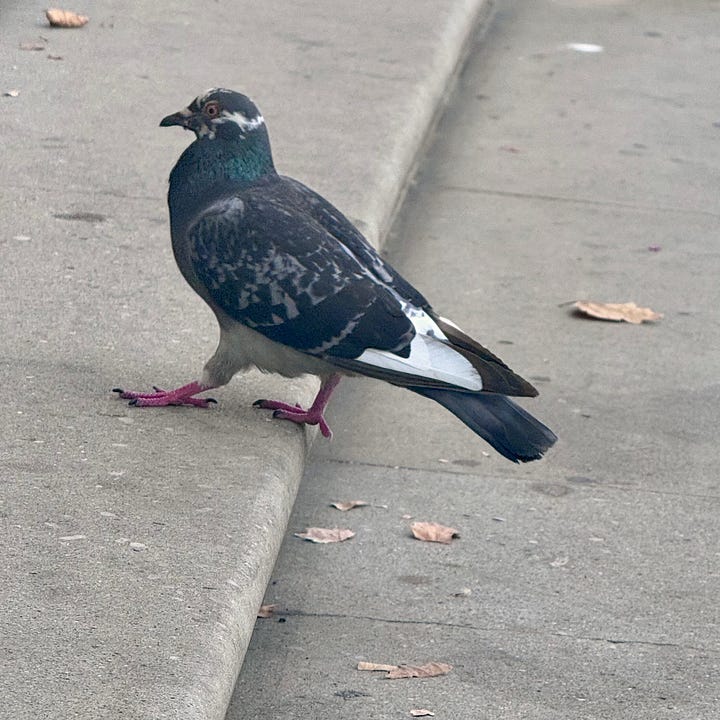
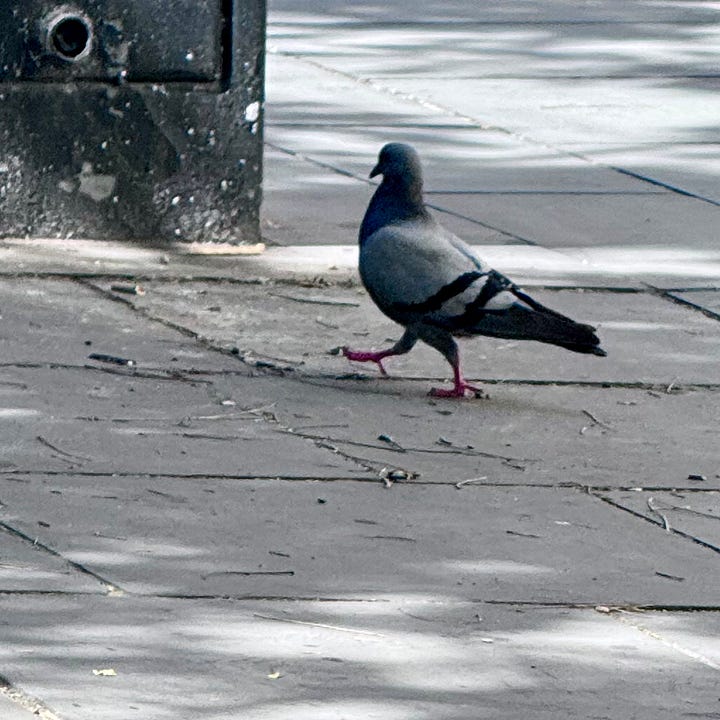


London’s pigeons are not as charming as the ones in Montpellier. Somehow, the ones in London felt very pedestrian and a bit basic. It feels weird to call a bird basic, but here we are! They are not here to entertain me, but to give me something. I didn’t notice any engaging chatter, and they didn’t travel in a larger flock, so there were no group dynamics to observe. Maybe they reminded me more of NYC pigeons, which I would never hang out with in the way I hung out with pigeons in Montpellier.
Collective nouns are specialized words used to describe a group of animals. For example, a murder of crows or a school of fish. Earlier this year, during my evening question dump, I wanted to know who came up with collective nouns.

As Wikipedia notes:
The Book of Saint Albans, originally Boke of Seynt Albans, is the common title of a book printed in 1486 that is a compilation of matters relating to the interests of the time of a gentleman [...] It contains three essays, on hawking, hunting, and heraldry. It became popular, and went through many editions, quickly acquiring an additional essay on angling [...] The book contains, appended, a large list of special collective nouns for animals, "Company terms", such as "gaggle of geese" and the like, as in the article List of animal names. Amongst these are numerous humorous collective nouns for different professions, such as a "diligence of messengers", a "melody of harpers", a "blast of hunters", "a subtlety of sergeants", "a gaggle of women", and a "superfluity of nuns". The tradition of a large number of such collective nouns which has survived into modern Standard English ultimately goes back to this book, via the popular 1595 edition by Gervase Markham in his The Gentleman's Academic.
I was scrolling through Instagram and came across a video about hyperverbal Autism. I didn’t know this specific label existed. However, I immediately felt seen. Hyperverbal autism describes individuals on the autism spectrum who talk excessively, processing thoughts through continuous speech. Some characteristics include speaking continuously at high speed in a complex poetic language, speaking loudly/“inappropriate” intonation or inflection, monologuing/infodumping, and regulating the nervous system through speech. There are more things to add, but I am trying not to get distracted. I was typing a flurry of words to a friend, then got frustrated and sent him a three-minute voice note instead, because, duh, I need to process this verbally. I was telling him that I do want to see the person who diagnosed me with Autism for more information (I want to nuzzle myself in some hyper-specific neurological digressions), but I am not interested in “fixing” myself. I would never want to dampen what I feel like is a core element of what makes me, for better or worse, Kameelah. I will speak to my support team and figure some things out — mostly strategies for where to keep all the speech, particularly when there is no one around to babble at :)
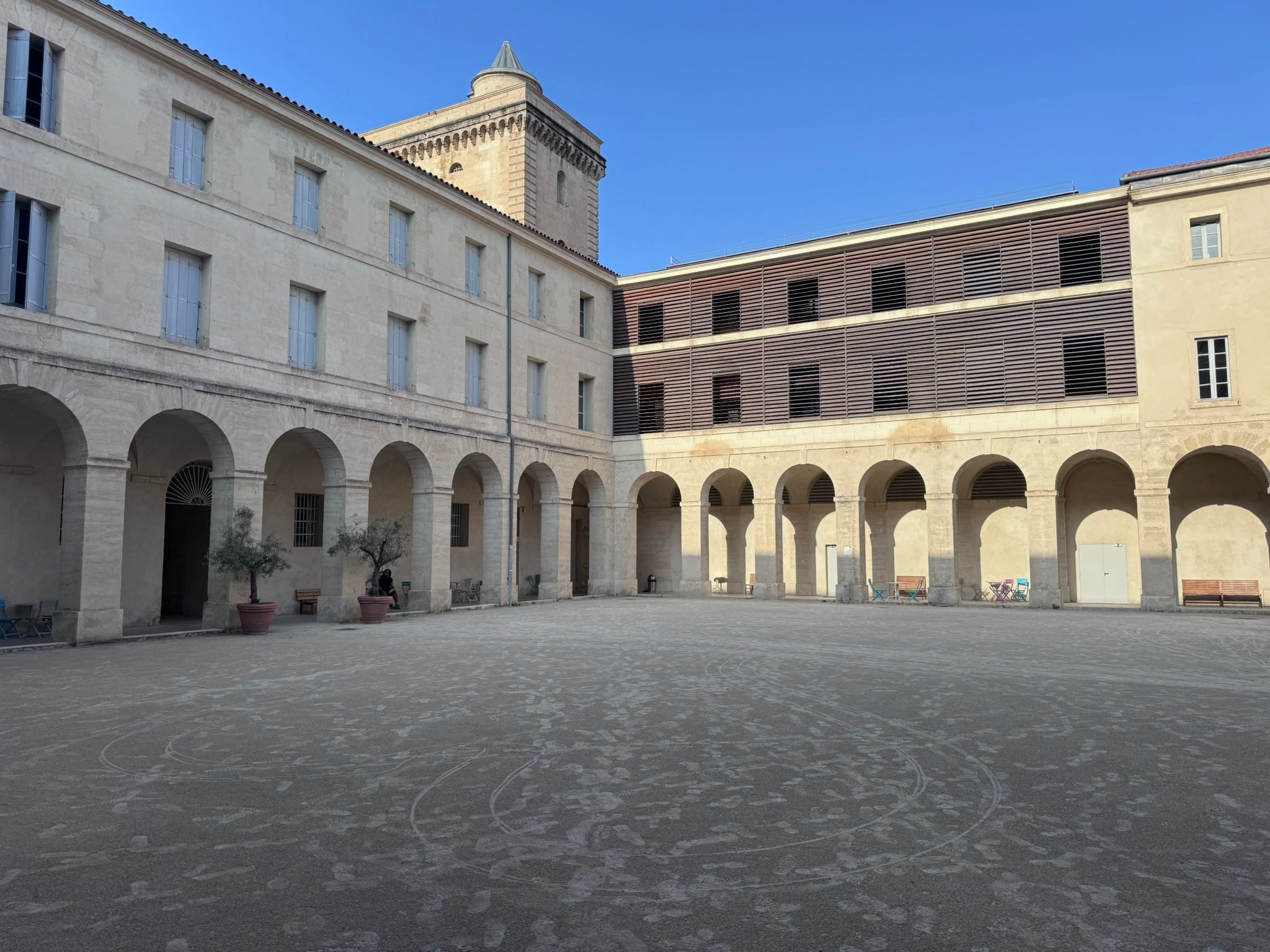
During my last lunch at L’Oignon Givré here in Montpellier, a friend sitting across from me said, “You do not have a center.“ When I asked her, hours later, what she meant, she said she didn’t remember saying it, but remembered an approximate comment. Trusting our collaged memory, I knew what she meant, but I did not know what to do with the flood of associations. To be without a center feels so … lonely, without affinity. To be without a center is to be unmoored and sometimes undiscoverable. Without a center, what holds me? It is an aspect of my selfhood and by extension, my artistic practice, that has always concerned me. Here, “concern” may be hyperbolic and overly diagnostic. Rather, I am curious about my relationship to centers, edges, and excess. I admire other artists who can work on a single project for many years. I am in awe of that level of commitment to a singular focus – the longform production. This discipline makes me suspicious of my own forms. I believe suspicion is an important methodology, and I employ it when I get too settled in my routines or when I encounter too neatly organized ideas. Coming back to this collaborative memory of a center, I realized that the statement was not an indictment so much as an invitation to sustain this absent center, to evacuate a single origin for all that I produce, to escape the orbit of a practice that is, at times, even incoherent to me. While there is no single project I have worked on for most of my “career,” there is a set of questions that has animated everything I have made over the past twenty years.
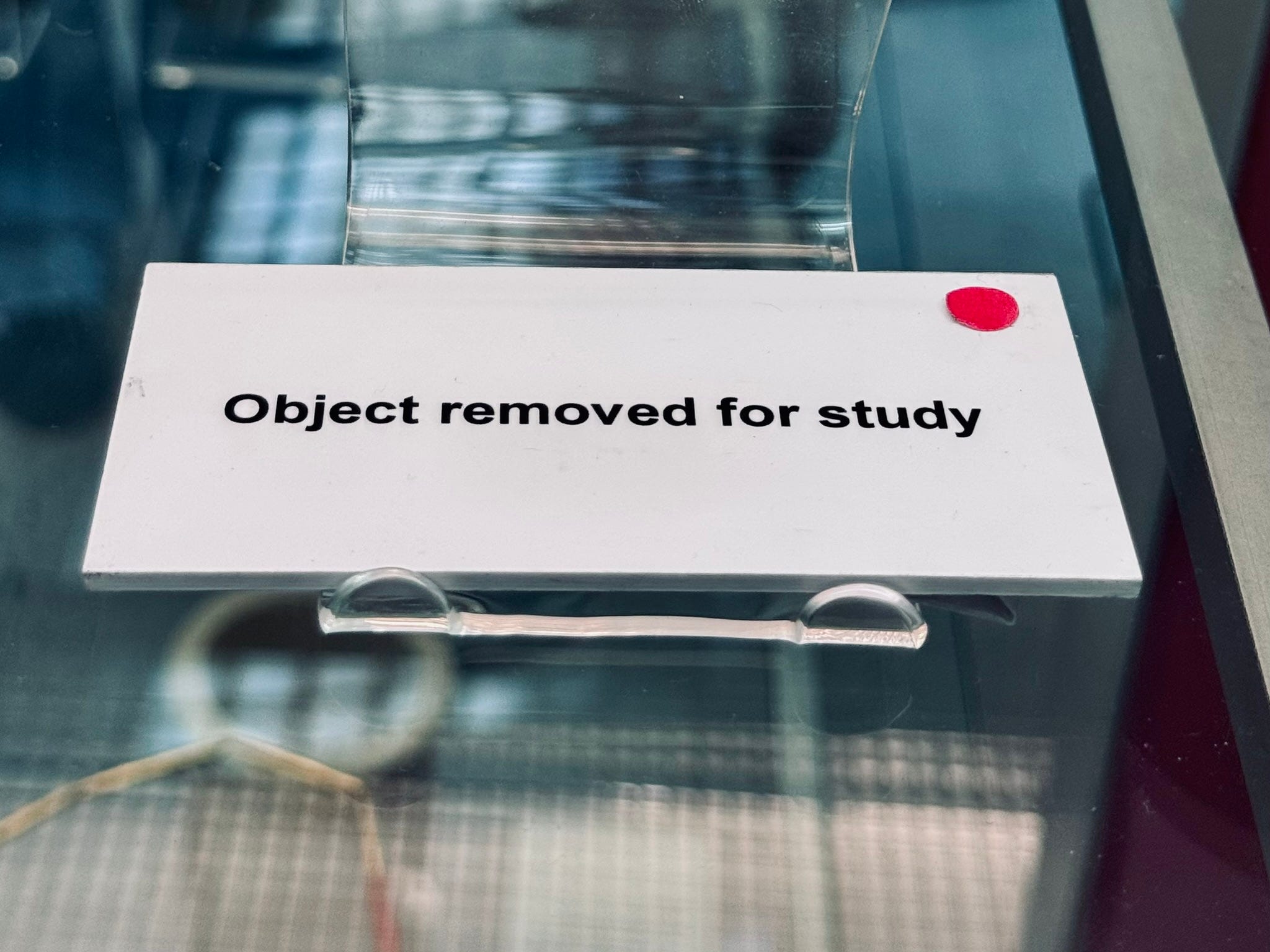
I need to write about the British Museum, but I just do not have the energy right now. It was a psychologically and spiritually bewildering experience. I am thinking a lot about death, preservation, and artificial life extension. The labels were so jarring. I continue to encounter places and have experiences that reinforce why I gravitated to death work. I believe death doula work is intimately connected to colonial and institutional archives. I see the insistence on death everywhere and non-consenting/coerced life extension. I see the wielding of the power over who dies (necropolitics) and who gets to stay dead. I never thought of my life's work as death work, but I see it everywhere, and I cannot unsee it. Speaking of death, I have been unable to watch the coverage of Nolan Wells. It is not for a lack of concern. In fact, it is an abundance of concern. Seeing his parents is too much. Knowing the details of his autopsy is too much. Hearing, secondhand, about the mocking is too much. Of course, this is nothing like the pain he experienced and the torment his family has to encounter every day. It makes me angry in an indescribable way. I am thinking about the hanging deaths of Black people that have been ruled as suicides. I am thinking about the Emmett Till National Monument that the current administration is threatening to remove. It is not about the murders. It is not about the deaths. It is about the indefatigable insistence of Black death as a foundational feature of existence.
Until next week,
Kameelah 👽

How to cite this newsletter: Rasheed, K. (Year, Month Day). Newsletter Title. I Will (?) Figure This All Out Later. URL